
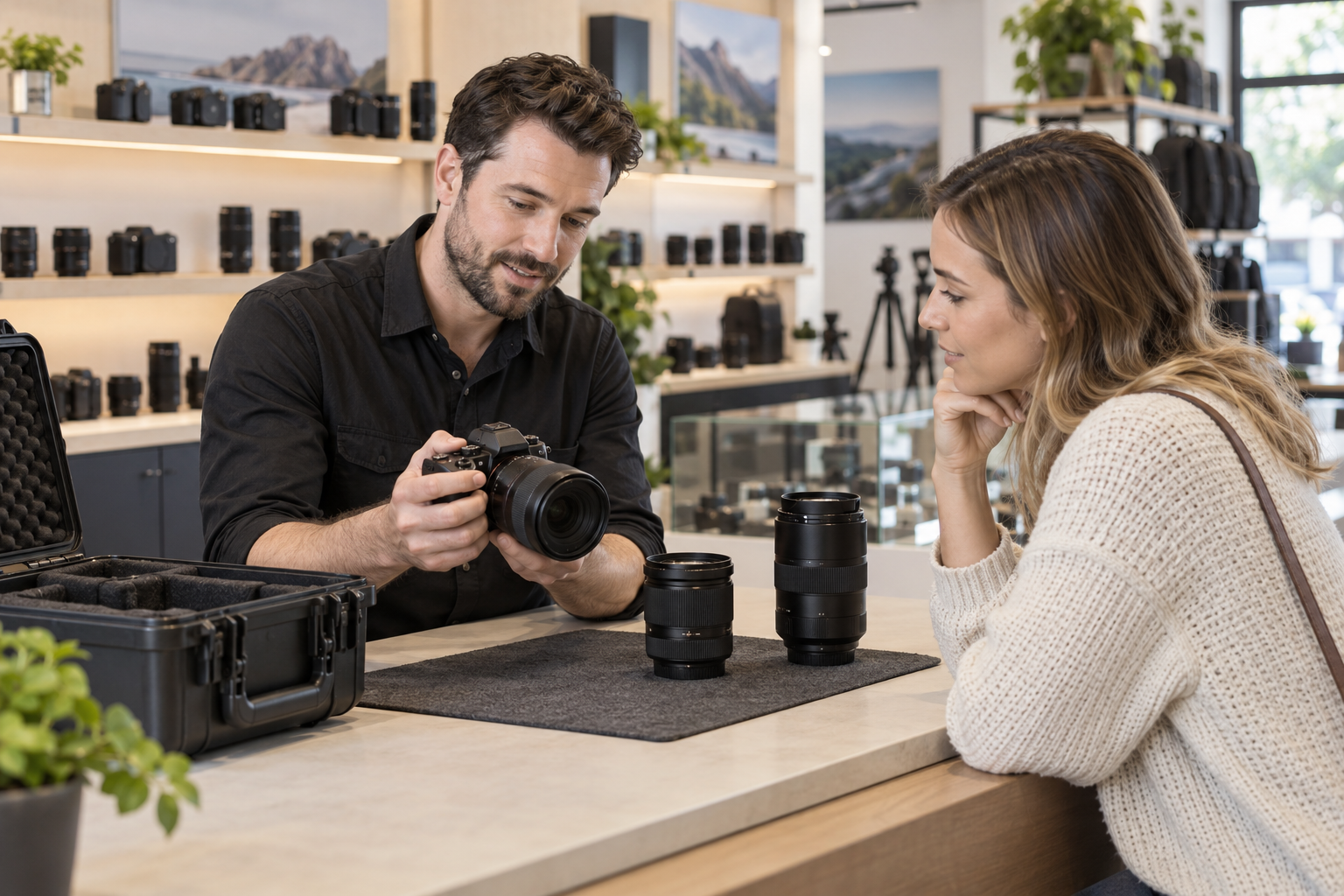
Australia’s photography retail sector is responding to changing customer expectations as buyers seek more than online product listings and basic price comparisons. A modern Camera shop now serves as a specialised service centre where photographers can inspect equipment, receive practical advice and compare products before making significant purchases. This hands-on approach remains relevant as camera systems become more technically advanced and buyers demand clearer guidance about compatibility, performance and long-term value.
Location-based searches are also influencing how consumers choose photography retailers, with the keyword “Camera shop near me” increasingly used by customers seeking immediate access to equipment, repairs or professional support. Local availability is particularly important for working photographers who cannot wait several days for delivery or need to confirm that a lens, battery, memory card or lighting accessory is compatible with existing equipment.
Buyers Seek Practical Product Guidance
Photography equipment represents a substantial investment, especially for customers building a complete system. Camera bodies, lenses, flashes, tripods and storage products must work together, and buying decisions can affect future upgrade options.
Specialist retailers can assess how equipment will be used and recommend products that suit those requirements. A sports photographer may prioritise autofocus speed and weather protection, while a studio photographer may place greater value on resolution, flash compatibility and tethered shooting. Video creators may require reliable stabilisation, external audio connections and extended recording performance.
This advice can help customers avoid paying for features they are unlikely to use. It can also identify accessories that are essential for a particular setup, reducing the likelihood of compatibility problems after purchase.
Hands-On Testing Retains Its Value
Online specifications provide useful information, but they do not show how equipment will feel during regular use. Physical handling allows buyers to assess grip size, control placement, viewfinder quality, menu design and overall weight.
Lens selection also benefits from direct comparison. Two products with similar focal lengths may differ significantly in autofocus behaviour, minimum focusing distance, balance and optical performance. Testing equipment in person gives photographers a clearer understanding of these practical differences.
The growing popularity of the mirrorless camera has made product comparison particularly important. Manufacturers now offer distinct lens mounts, battery systems and feature sets, meaning customers must consider the wider system rather than evaluating the body alone.
Rental Services Support Informed Decisions
Short-term access is becoming an important part of the photography market. Customers may need specialist equipment for a commercial assignment, sporting event, wedding, travel project or production without requiring permanent ownership.
Services offering Camera rental in Perth options can provide access to professional bodies, premium lenses and production accessories for a defined period. Renting may be suitable when equipment is needed for a single assignment or when the cost of ownership cannot be justified by expected use.
Rental also allows photographers to test equipment under realistic conditions before purchasing it. A lens that performs well during a brief demonstration may feel different after several hours of professional use. Evaluating autofocus, weight, battery demand and handling during an actual project can support a more confident buying decision.
Customers should review rental terms carefully, including identification requirements, deposits, collection times, insurance conditions and responsibility for accidental damage. Equipment should also be inspected at collection so its condition and included accessories are clearly documented.
Used Equipment Expands Access
The second-hand market continues to offer an entry point for new photographers and a cost-effective upgrade path for experienced users. Professionally inspected products may provide strong value when their condition, shutter count and operating performance are clearly disclosed.
A reliable assessment should examine the sensor, lens mount, controls, ports, screen and battery compartment. Lenses may require checks for scratches, internal dust, fungus, autofocus performance and smooth operation of focus and zoom rings.
Warranty coverage and return conditions can vary between used products, making clear retailer policies important. Buyers should understand what has been tested, what accessories are included and whether the product remains supported by its manufacturer.
Trade-in services can further reduce upgrade costs. Existing equipment may be assessed and applied towards another purchase, allowing photographers to change systems or replace ageing gear without managing a private sale.
Technical Support Strengthens Retail Service
After-sales assistance is becoming a key point of difference in specialist photography retail. Firmware updates, sensor maintenance, equipment configuration and fault assessment can be difficult for customers unfamiliar with technical procedures.
Retail staff can often identify whether a problem relates to settings, compatibility, contamination or a component failure. This initial assessment may prevent unnecessary repair bookings or provide a clearer path to authorised servicing.
Education also supports safer equipment use. Advice about battery storage, memory card management, weather protection and correct cleaning methods can extend product life and reduce avoidable damage. For professional users, dependable technical support can also minimise downtime between assignments.
Specialist Retail Remains Relevant
Photography retail is increasingly centred on service, access and informed decision-making rather than product supply alone. Customers can research extensively online, but many still benefit from inspecting equipment, discussing specific requirements and receiving support after purchase.
Retailers combining informed advice, product testing, short-term hire, used equipment and technical assistance are better positioned to meet the needs of photographers at different experience levels. As equipment choices become more complex, accessible specialist knowledge remains a practical part of the purchasing process.